National Recycling week 2012

This week is National Recycling week (12-18 November) and the City of Swan kicked it off with a Recyclable Goods drop off day last weekend. There was a phenomenal turn out, with containers overflowing with recyclable goods. One of the items the City were accepting was mattresses.

Apparently an average mattress consumes 0.75 m3 of space in landfill, and Australians send over 1.25 million mattresses to landfill each year! That’s a lot of space taken up in our landfill sites that could otherwise be recycled.

The City of Swan has collected over 11 tonnes of mattresses this year at its Recyclable goods days.

The Eastern Metropolitan Regional Council (EMRC) opened WA’s first Mattress Recycling Facility in 2009 which is located at Lakes Road, Hazelmere. 

 What is recycled from Mattresses?

  • Timber: Timber from bases is recovered and sent to the EMRC’s timber recycling facility where it is processed into a reusable woodchip and used in the manufacture of particleboard, animal bedding and mulch.
  • Springs: Steel springs are sent to scrap metal merchants and melted down into new steel.
  • Foam: The foam and wadding from inside the mattress is reused as carpet underlay.

 The average mattress contains 12.5 kg of steel, 2 kg of wood and 1.5 kg of foam.

 So next time you replace your mattress look on the COS website for the next Recyclable Goods Drop Off Day and help our environment! There’s another one in January 2013.

Electronic waste collected. Photos Courtesy of Murray at the COS



In case you missed it – preserving the harvest

There was rain, there was thunder and lightning and squally wind.  It was a dose of winter at the end of Spring, and it was NOT going to stop the Kitchen Gardeners holding their Preserving the Harvest workshop.

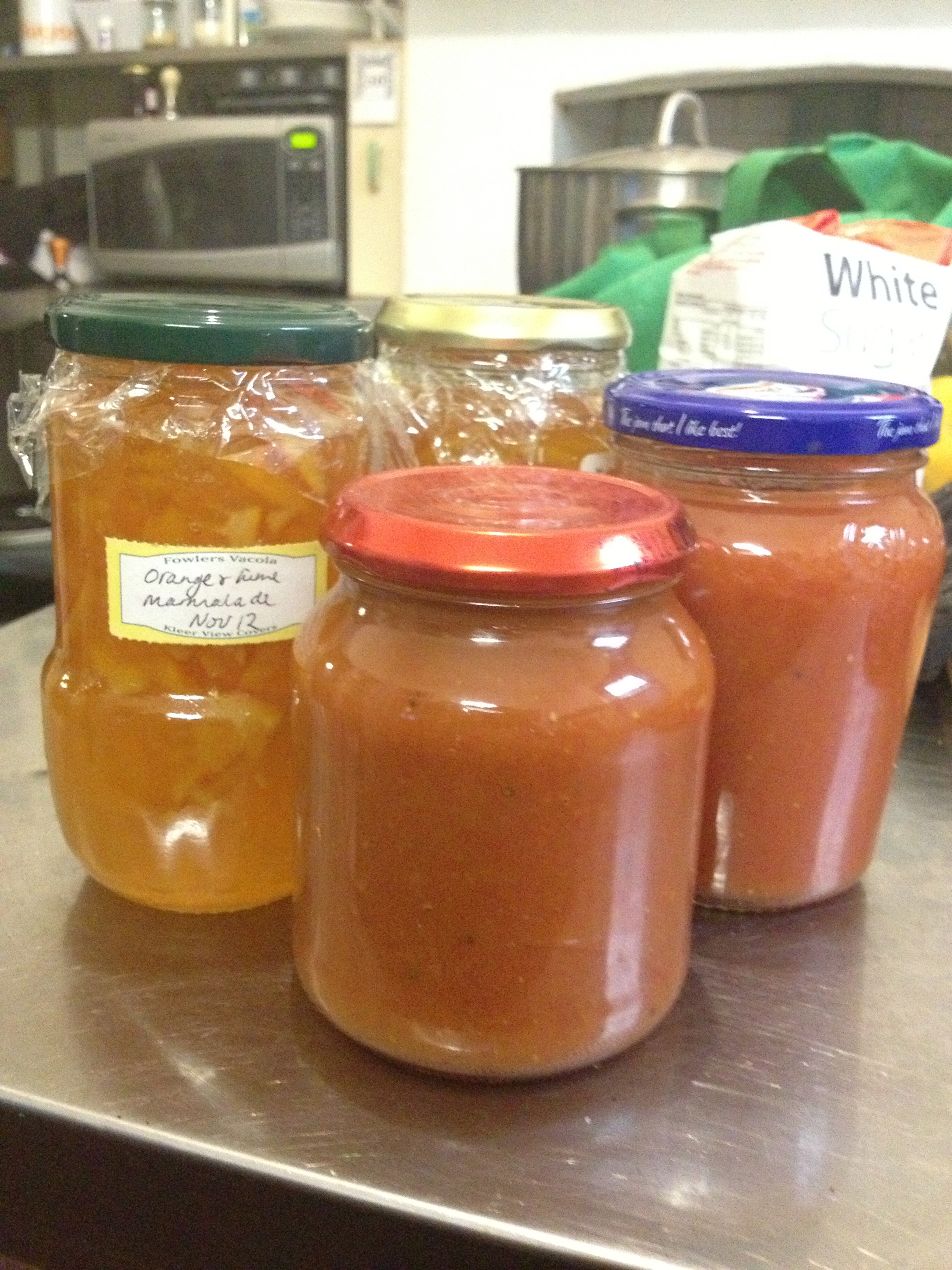
The plan had been to make marmalade, lemon curd, lemon cordial, tomato passata and Moroccan preserved lemons.  Well, four out of five is pretty good.

Tomatoes, ready for processing

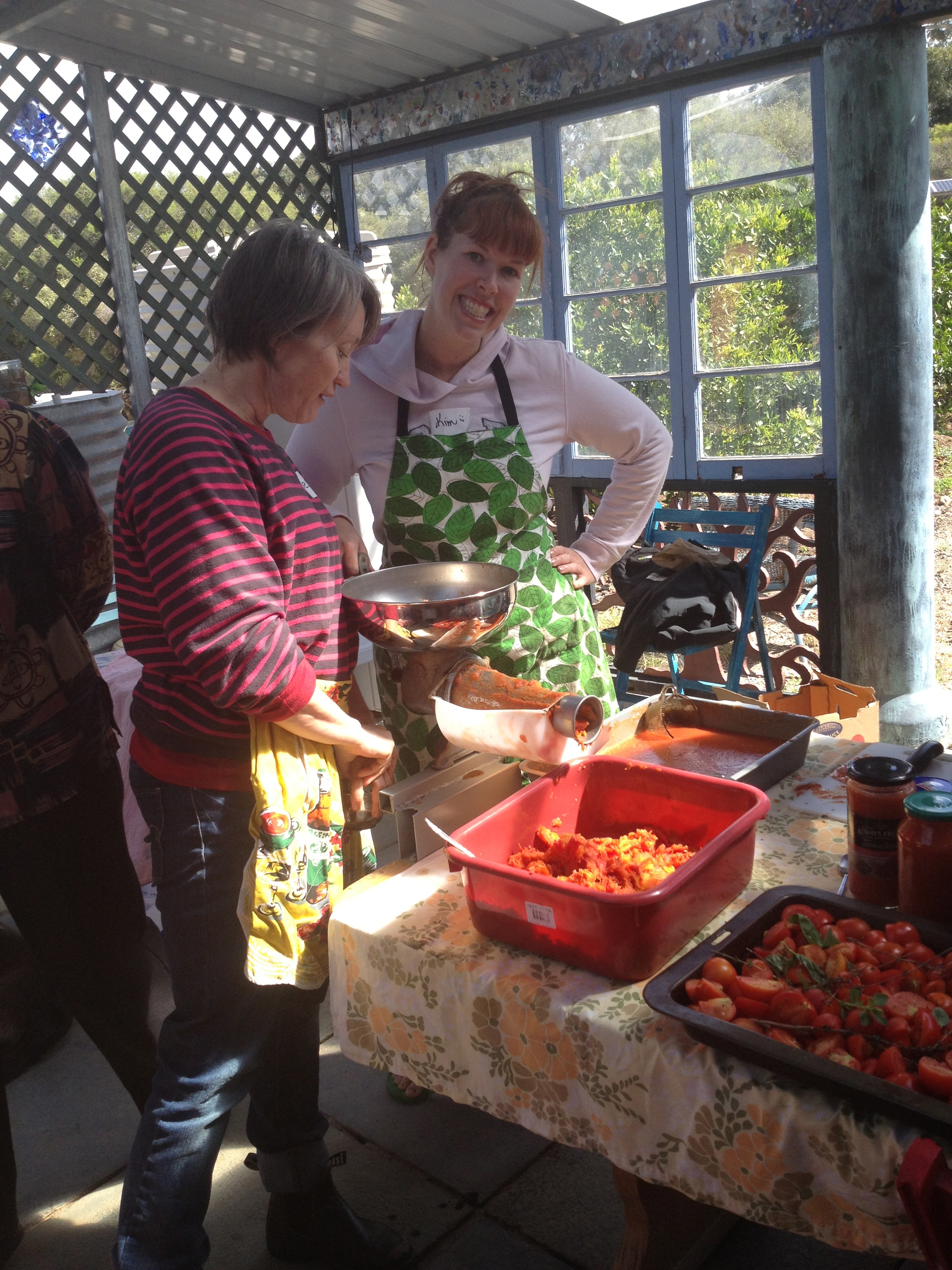
We managed to process something like 30kg of tomatoes into passata, flavoured with garlic, thyme and oregano.

We also made up a dozen or so jars of Debra’s microwave lemon curd (recipe at the end) and two batches of marmalade using Elizabeth’s Great-Nana’s guaranteed recipe (recipe also following).  Debra also made just enough lemon cordial for us all to try.

Sadly, we just didn’t get to the Moroccan lemons.  There was a bit of a jar issue and, well, we just ran out of time.  What with having to try two different kinds of marmalade, some experimental kiwifruit jam and the lemon curd on Peter’s turkish bread, you get the picture…

Bev and Kim with great piles of tomatoes

Debra’s microwave lemon curd 

  • 3 large eggs plus 2 egg yolks
  • 1/2 to 3/4 cups caster sugar (adjust for your personal sweetness preference)
  • 1/2 to 3/4 cup lemon juice plus finely grated zest (can substitute some  passionfruit pulp and or lime juice within this quantity)
  • 125 g unsalted butter, melted

Whisk all ingredients together in a glass or ceramic bowl.

Microwave @  50% power for 10-12 minutes, stirring well after each minute until the mixture thickens.

Bottle in clean glass jars & store in fridge.  Use within 3 weeks.

*can be cooked on the stove using a double boiler on medium heat, stirring regularly to avoid curdling.  REMEMBER TO STORE IN FRIDGE!

Orange marmalade and tomato passata

Elizabeth’s Great-nana’s guaranteed marmalade

  • 1lb citrus fruit, sliced very finely
  • 2 pints water
  • 3lb granulated sugar

Slice citrus finely and remove pips.

Put fruit and water into your jam pot and simmer until the fruit is soft – this is important as once you put the sugar in, no further cooking occurs.  If you don’t get the fruit really soft first up, your marmalade will be impossible to chew.

Put your jars and lids into a 120deg C oven to sterilise them.  It’s important that your jam goes into hot jars – hot jam into cold jars is likely to end in an explosion.

Once the fruit is soft, add sugar and boil to setting point.  To check setting point, put a dribble of marmalade on a saucer you’ve had in the freezer for 10 minutes.  Marmalade at setting point will crinkle when you push your finger through it.

Leave the marmalade to sit for 10 minutes.  This is also important – slightly cooled marmalade will mean your fruit is evenly distributed in the jar, rather than floating on the top.

Pour into sterilised jars, seal and label.

*1 pint = 600ml, 1 lb = 455g

We are planning on having another preserving workshop in February 2013, but in the meantime – Happy preserving!

Hands on Bicycle Maintenance Workshop

Join us for a hands on, fully coached bicycle maintenance workshop.

Learn how to service your own bike, including:

  • Intro – you can do 90% of bike maintenance yourself!
  • “ABCD” bike check – what to look out for to ensure your bike is roadworthy and operates efficiently
  • Basic bike fit adjustments – seat hight, seat fore/ aft etc
  • Cleaning and lubing chain, edge of jockey wheels etc.
  • Dropped chain – how to fix it
  • Taking wheels on and off – correct use of the quick release lever
  • Taking off a tyre and changing a tube easily.
  • Plus many more….. even for experienced cyclists

When: Sunday 25th of November
Where: Guildford Primary School courtyard
Time: 2-5 pm
Cost: $30 per person (bike services usually cost $50 or more)
Note, kids under 16 can attend with an adult for free, with their own bike included, as long as they are supervised and work together with the adult.
RSVPhttp://ttgbike.eventbrite.com.au/

What you need to bring: Your bike! and old clothes

The workshop will be run by Mike Norman, professional cycle coach from the Secret Cycling Business. He will demonstrate each step and then participants get to work on their own bikes with assistance.

Afternoon tea provided.

Places strictly limited to 30 adults with bikes. RSVP and pre-pay essential via http://ttgbike.eventbrite.com.au/

Any questions email ttguildford@gmail.com or call Peter on 0438 940 386