Category Archives: Food

Pasta, pesto and cheese

It seems lots of people have pasta rollers gathering dust at the back of kitchen cupboards, and when Elizabeth called for suggestions for workshops for Kitchen Gardeners in 2013, that was one echoed by lots of us.

And what a wonderful idea it was!  Combined with fresh mozzarella, pesto and gnocchi, the fettuccine we made was a hit.

This was the smallest workshop we’ve ever run, and with that menu, it was also the most intense.  With everything timed and timetabled, we did get through all four in the afternoon, but only just!  Here’s Sarah stretching mozzarella.

Cheese5

Under the careful instruction of cheese whiz Dan, we all got to take home the most heavenly bocconcini.

DSC03733

Michelle and Amanda, with supervision from young Eli, roll out their fettuccine.

Pesto2

Everyone raided their gardens for basil for pesto.  Simon (the one with the intense expression at the back) has put a lot of thought into his pesto and believes the key is in equal parts of nuts and cheese, with careful addition of basil because our harsh climate produces sometimes bitter leaves.  We tested this theory and agree.

nochi1

Gnocchi is ridiculously simple to make and quite delicious.

Finally, a document with the recipes – pasta pesto cheese recipes April 2013.
Jetto’s Patch visit in March

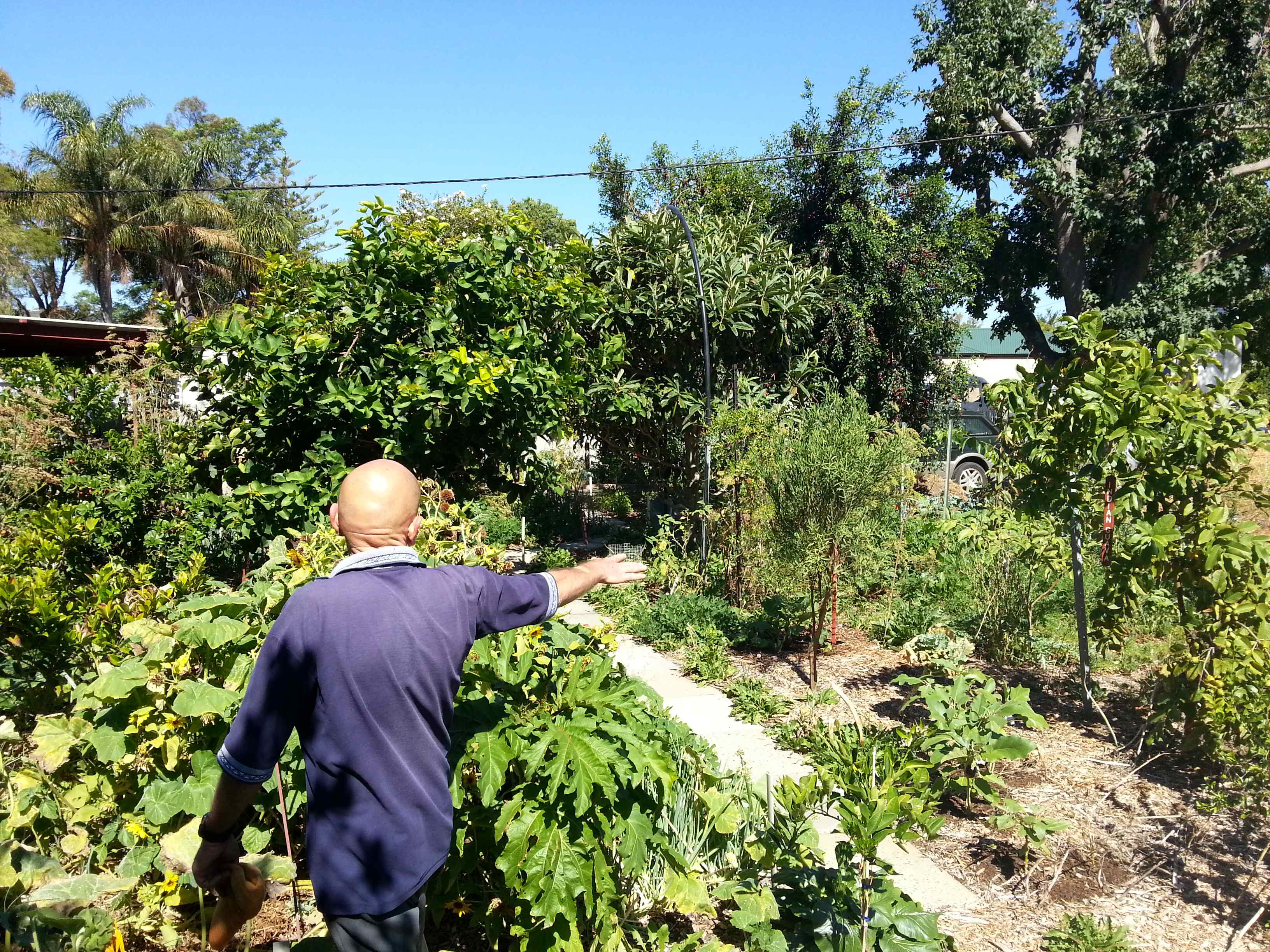
If you were ever looking for inspiration, or just wondering what might be possible on an average suburban block, Jetto’s Patch in Maida Vale has much to make you think.

Dario in the front yard, which they converted from lawn only 18 months ago!

Dario in the front yard, which they converted from lawn only 18 months ago!

Starting in 1989, but with the newest parts only 18 months old, Dario and Michelle grow something in the region of 500 edible species on their 1482 sq m block.

The Kitchen Gardeners were delighted to accept an invitation from Dario and Michelle to hold their March workshop at Jetto’s Patch.  Some of us opted for the advertised potting seeds workshop, where we used some of our collected and donated pots, and made some out of newspaper following Debra’s expert instructions.

Most of us wandered about the verdant paradise admiring just how many plants and the amazing variety of edible plants it is possible to grow in Perth.  There are the obvious ones like figs and grapes along with some very interesting ones that you would not expect to find thriving in Perth: arabica coffee, pineapples, cherries, raspberries.

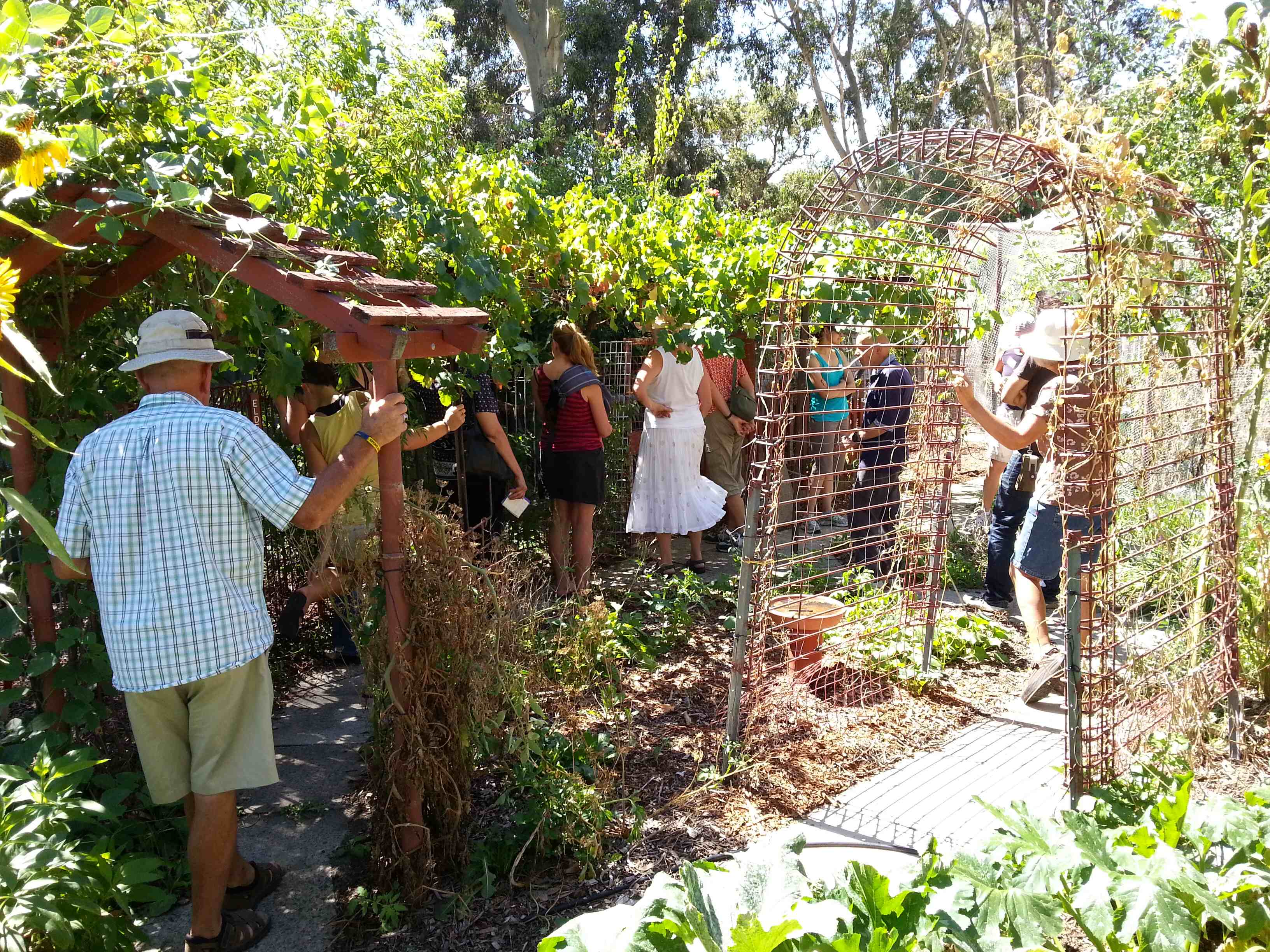
Touring the chook pen and garden

Touring the chook pen and garden

It was a hot day, but the garden was lovely and cool

It was a hot day, but the garden was lovely and cool

Lots of us took home a little piece of Jetto’s – sugarcane, perpetual pumpkin seeds and a renewed zeal for growing our own food.

If you missed out, Dario and Michelle love visitors – you can contact them via their Facebook page – JettosPatch

Dario's raised beds made of left over concrete slabs and a metal frame

Dario’s raised beds made of left over concrete slabs and a metal frame

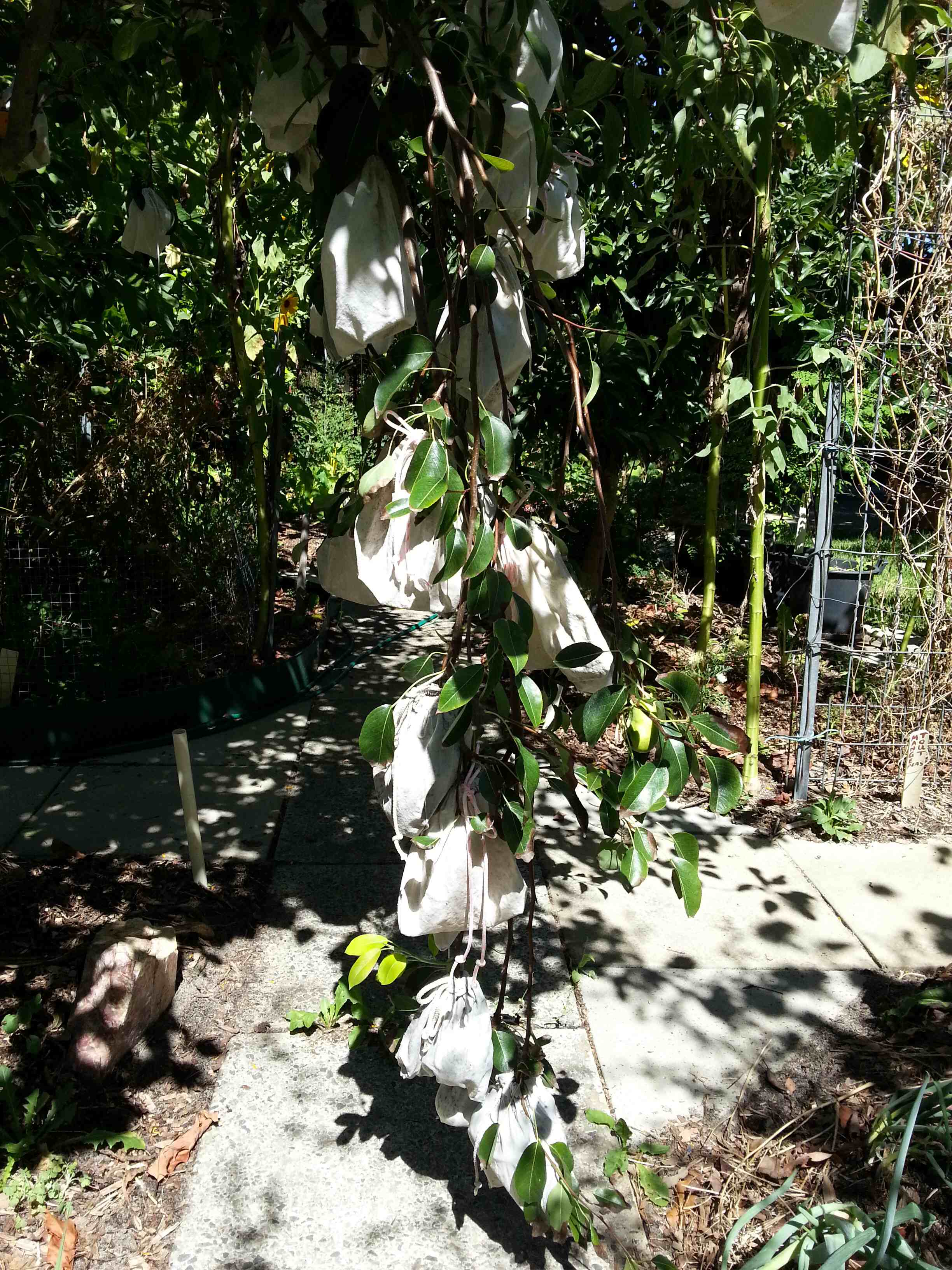
Calico fruit bags to protect fruit from birds and bugs

Calico fruit bags to protect fruit from birds and bugs

Happy chooks

Happy chooks

February’s preserve and jam workshop

The workshop was great fun and Emma and Kerrin’s house smelt absolutely divine.  We made 20 jars of jam – half plum, other half nectarine and mango, and 20 jars of Emma’s summer pickle.

Master jam stirer


If you’d like to make your own jam, here’s how you do it:

Elizabeth’s great-nana’s failsafe jam

Ingredients

  •  Quantity of soft fruit (plums, strawberries, apricots, peaches…)
  •  Equal quantity by mass of sugar.
  •  Juice of a lemon.
  •  Commercial pectin (quantity by weight, one packet of Jam Setta to 1.5kg fruit)

Method

  •  Wash your fruit and cut it into equal-sized pieces, removing any stones, spots or yucky bits.
  •  Weigh your fruit.
  •  Weigh an equal amount of sugar, mix your pectin through this and set it aside.
  • At this point put your jars and lids in the oven at 100 deg to sterilise them.
  •  Put fruit in a large, heavy-bottomed pot on a very low heat.
  •  Let the fruit simmer very slowly until it is cooked.  This step is important, as once you add your sugar the fruit doesn’t cook any further.
  •  Once the fruit is cooked, add your sugar and increase the heat to a rolling boil.
  •  Boil about 10 minutes, then start to test for setting point.
  •  Once your jam has reached setting point, take if off the heat.  Let jam sit for 10 minutes or so, until the fruit no longer rises to the surface.  This will ensure that when you bottle it, the chunks of fruit are evenly distributed through the jar.
  •  Bottle, seal and label.
  •  Stand back and feel pleased with yourself.

Notes

  •  Pectin is the naturally occurring acid in fruit that aids in setting.
  •  Slightly under-ripe fruit is best for jam as it tends to contain more pectin.
  •  I usually guess with the amount of Jam Setta I use, depending on the type of fruit and its degree of ripeness.  It’s forgiving stuff.
  •  This recipe works for just about any soft fruit – the only failure I’ve ever had with it was with custard apple, and that was because it tends to be gritty.
  •  Setting point is the point at which the fruit soup changes its chemical consistency to a gel.
  • To test setting point, put a saucer in the freezer. When the fruit has been boiling for 10 minutes or so, put a smear on the cold saucer, put it back in the freezer to cool down quickly, then run your finger gently through it.   When the jam creases, it’s at setting point. You might need to do this a couple of times.  If you leave it past this you end up with toffee.

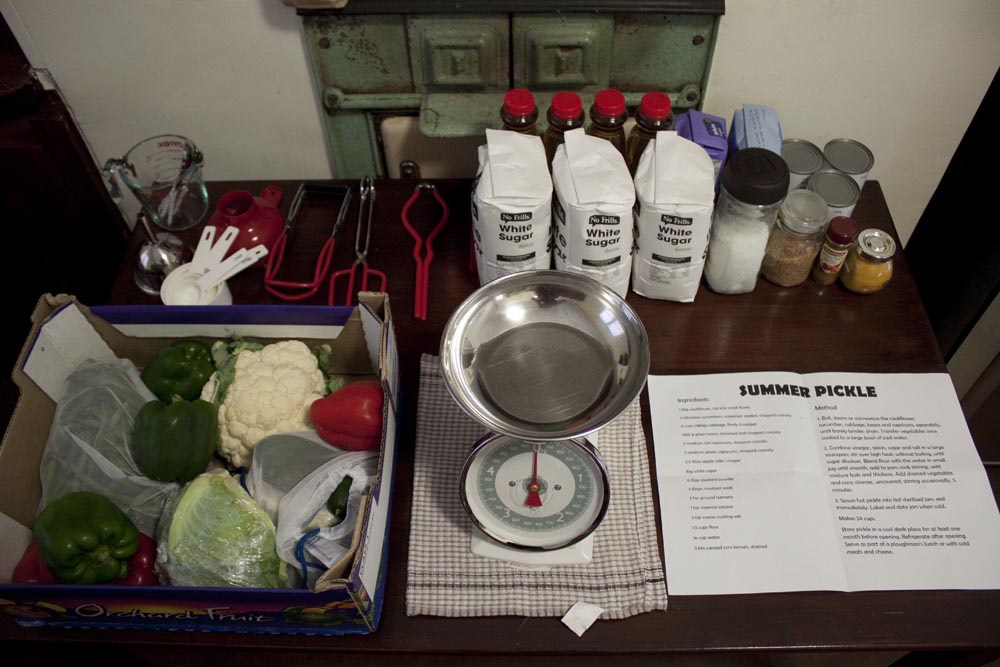
Summer Pickle 

If you’d like to try the summer pickle, you can download the recipe here.

Pickle prep

Furious chopping

Successful pickle