Tag Archives: DIY gardening

Loving your fruit trees

Lots of Kitchen Gardeners have talked about pruning their fruit trees with something akin to dread – the things that could go wrong!  But pruning your apples and plums isn’t nearly as fraught as you might think.

IMG_1387

Meet Rob.  Rob grew up on a biodynamic farm long before it was fashionable.  He has lots of amusing stories about dealing with the flummoxment of the experts from the Agriculture Department.

He’s pruned thousands of trees, starting when he was just a kid.

We were most grateful he agreed to share what he’s learnt about the care and maintenance of stone fruit, pome fruit and citrus.
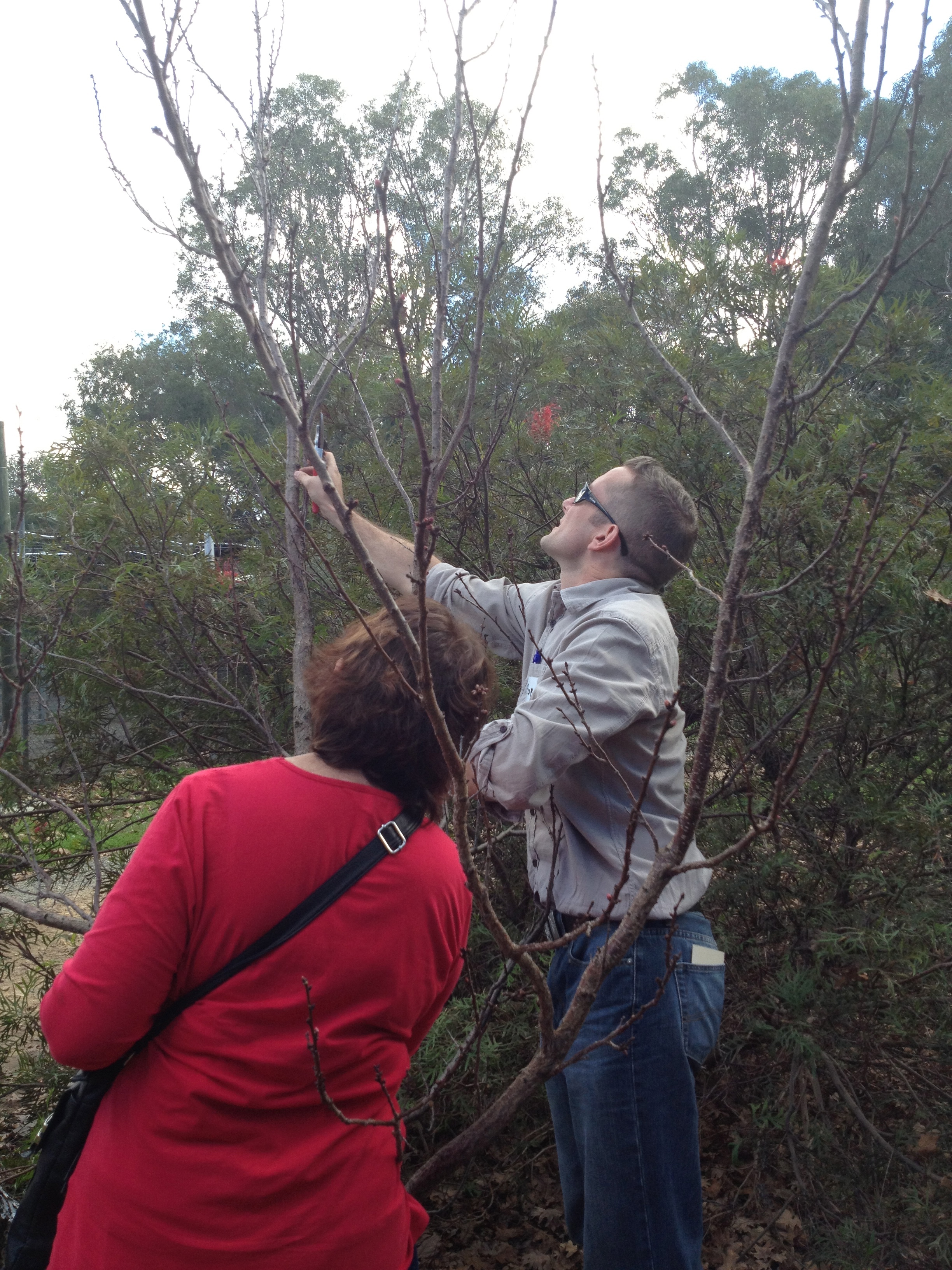
IMG_1385This is a very neglected apricot tree,  probably not pruned for five years.

It’s grown into an odd shape, and it overhangs a driveway.  While it’s healthy, it was not in a particularly good shape for fruit production, easy harvesting or good air-flow, which is important to reduce the likelihood of infestation or fungal infection.

The first principle Rob shared was that you can prune a tree any way you like but there will be consequences.  If you take out old growth on a tree that fruits on old growth, you can expect a reduced yield the next season.  Likewise if you want your tree to offer  you shade, you should expect not to be able to reach the topmost fruit.

This apricot will fruit on new growth, and we could see flower and leaf buds just waiting to erupt.

Rob trimmed the tall branches back to a reachable height, took out boughs that crossed each other and created a funnel shape to encourage air-flow and ease of harvest.  That meant taking out quite a bit of new growth, so there will be fewer fruit this year, but next year it should have a much larger yield.

IMG_1390This citrus, on the other hand, is not in a good position.  It doesn’t get enough direct sunlight and is competing also for water and nutrients with several other trees.

It has citrus leaf miner (spray with eco pest oil) and aphids (blast off with a jet of water from the hose).

Rob’s advice was to move it to give it the best chance of good growth and fruit.

Some other important things to remember:

  • Sterilise your tools between trees so as not to spread any infection.  A rag soaked in metho is cheap and easy.
  • Keep your tools sharp so your cuts are clean, reducing the chance of open cuts festering.
  • Keep weeds and mulch away from tree trunks to discourage collar rot.
  • Liquid feeding trees around the drip line is the most effective way of boosting fruit production and general tree health.
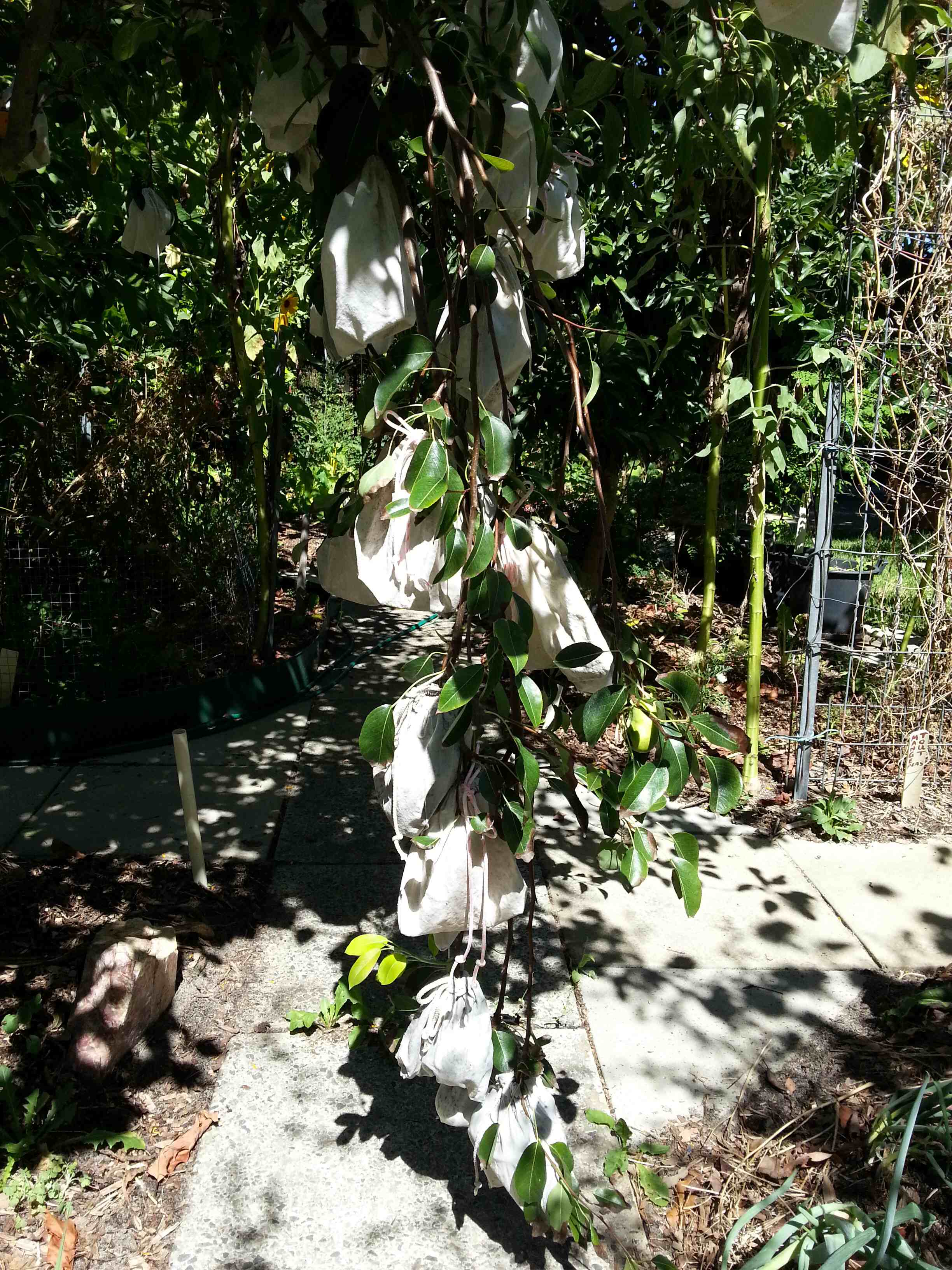
  • The best way to deal with fruit fly, which is a major problem in Perth, is to individually net fruit once it has set with a drawstring net bag.
  • Pruning can be done in winter or late summer/early autumn once a tree has finished fruiting.

Rob has agreed to do another pruning workshop next year, if you missed this one and are interested.
Jetto’s Patch visit in March

If you were ever looking for inspiration, or just wondering what might be possible on an average suburban block, Jetto’s Patch in Maida Vale has much to make you think.

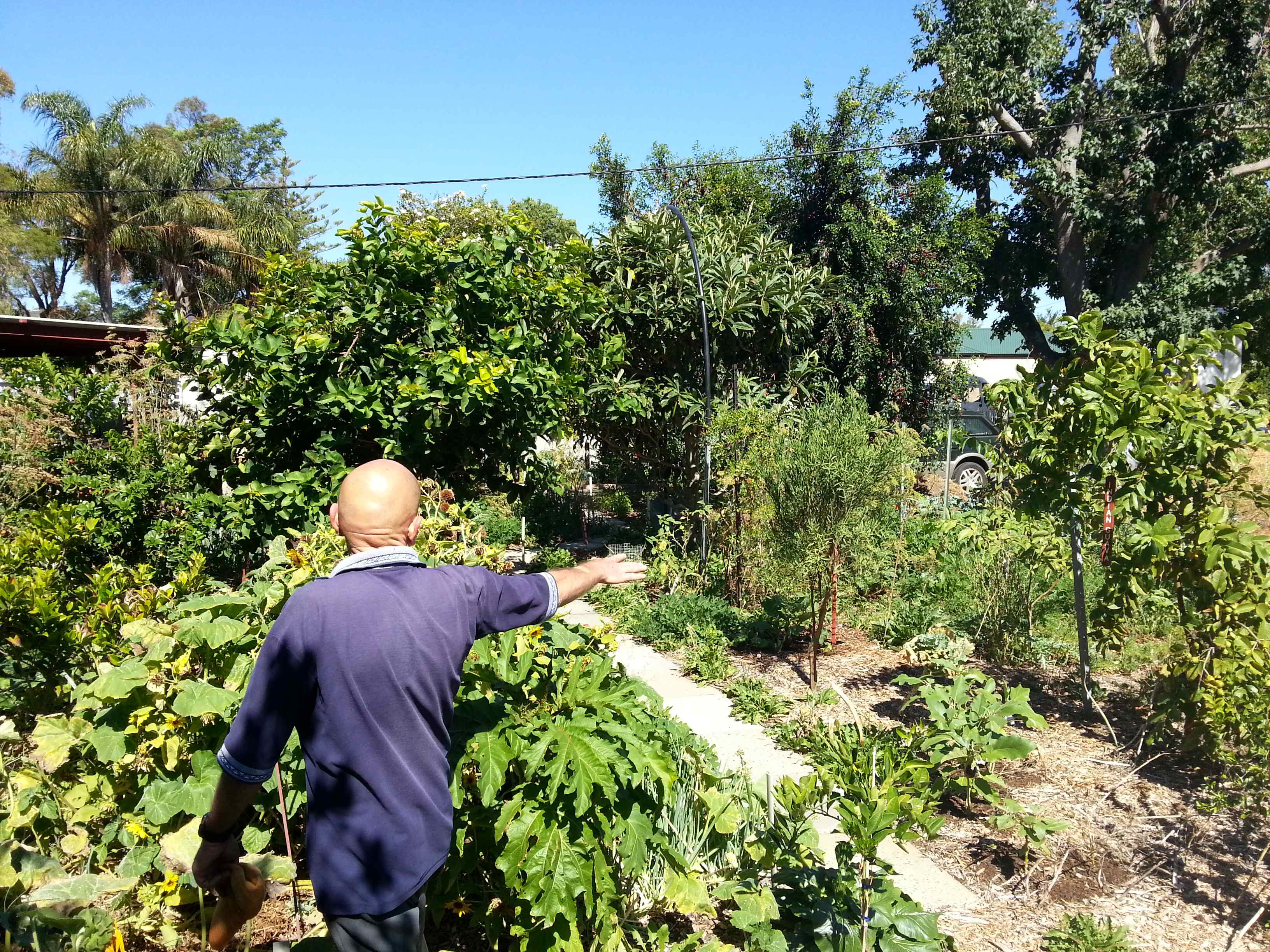
Dario in the front yard, which they converted from lawn only 18 months ago!

Dario in the front yard, which they converted from lawn only 18 months ago!

Starting in 1989, but with the newest parts only 18 months old, Dario and Michelle grow something in the region of 500 edible species on their 1482 sq m block.

The Kitchen Gardeners were delighted to accept an invitation from Dario and Michelle to hold their March workshop at Jetto’s Patch.  Some of us opted for the advertised potting seeds workshop, where we used some of our collected and donated pots, and made some out of newspaper following Debra’s expert instructions.

Most of us wandered about the verdant paradise admiring just how many plants and the amazing variety of edible plants it is possible to grow in Perth.  There are the obvious ones like figs and grapes along with some very interesting ones that you would not expect to find thriving in Perth: arabica coffee, pineapples, cherries, raspberries.

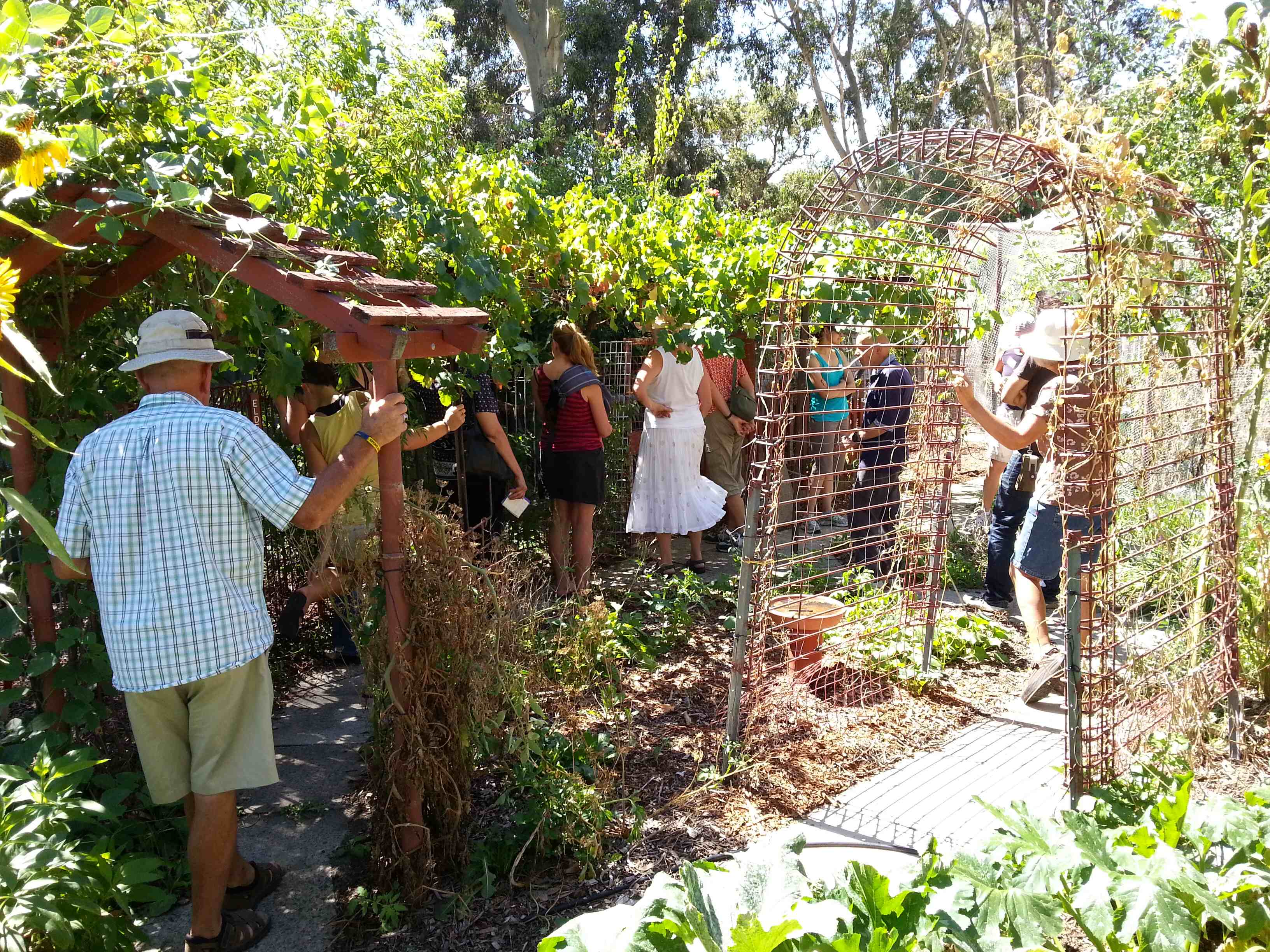
Touring the chook pen and garden

Touring the chook pen and garden

It was a hot day, but the garden was lovely and cool

It was a hot day, but the garden was lovely and cool

Lots of us took home a little piece of Jetto’s – sugarcane, perpetual pumpkin seeds and a renewed zeal for growing our own food.

If you missed out, Dario and Michelle love visitors – you can contact them via their Facebook page – JettosPatch

Dario's raised beds made of left over concrete slabs and a metal frame

Dario’s raised beds made of left over concrete slabs and a metal frame

Calico fruit bags to protect fruit from birds and bugs

Calico fruit bags to protect fruit from birds and bugs

Happy chooks

Happy chooks

Bees 101

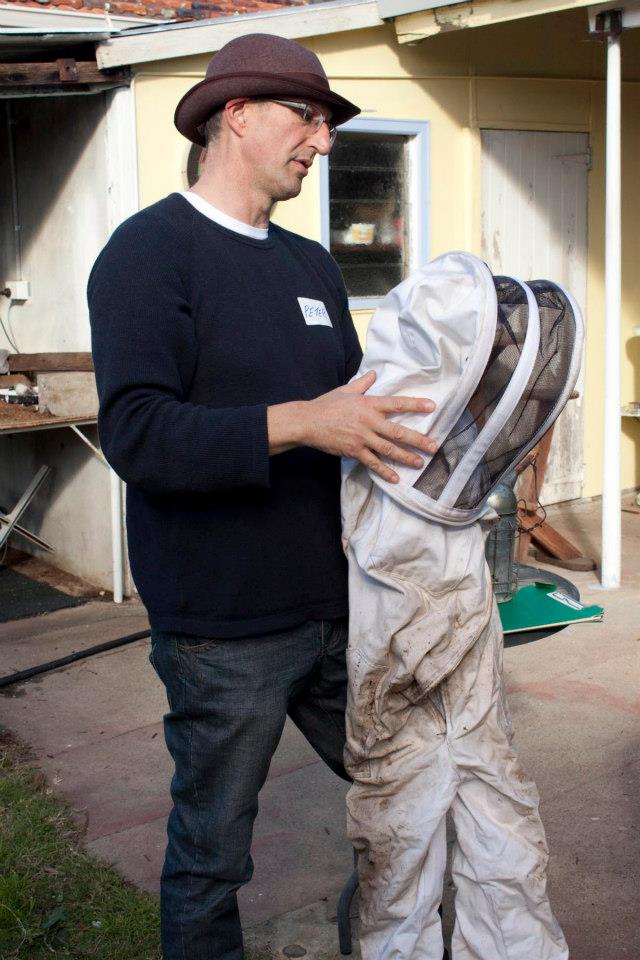
The latest meet of the Kitchen Gardener’s Society was all about keeping bees in the backyard. It was a lovely day, and more than one bee arrived to try to feed on the lovely cupcakes someone brought. For those that couldn’t make it, here’s a few tips I picked up from our bee keeper pro Peter Vedeniapine.

Why keep bees?

Honey of course! But they can also provide wax, pollen and more. Plus they’re vital for pollination. And it also looks rather satisfying.

What gear you need

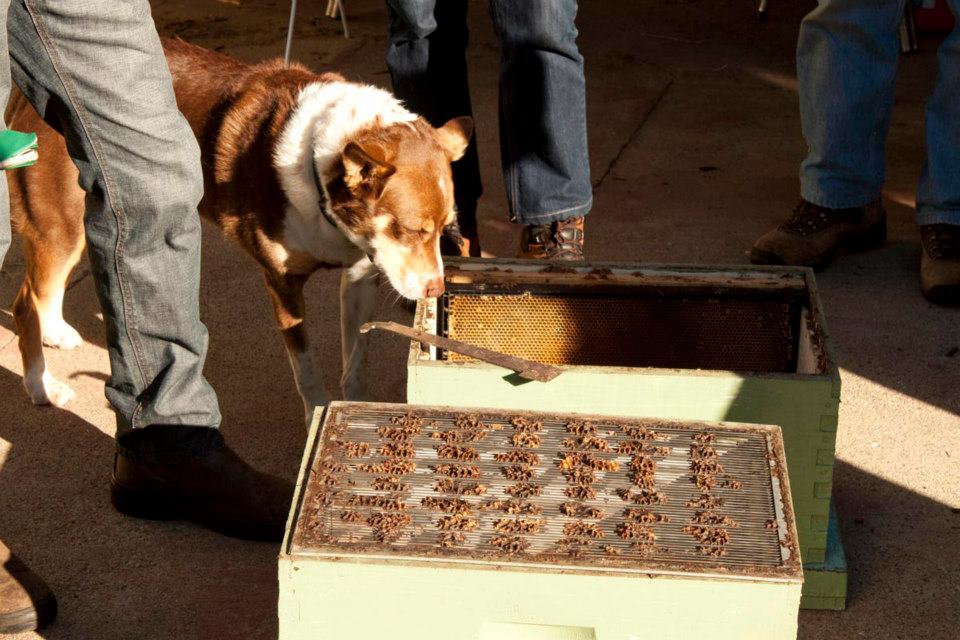
  • a bee hive (8 or 10 frame, full or shallow depth, 2 boxes minimum). Peter’s advice was to buy a flatpack from Guilfoyle’s (contact below) and build it yourself ~$180. Apparently Bees prefer the wooden frames, plus avoids plastic! Wire queen excluder is better.
  • a smoker (can pick them up second-hand)
  • Protective suit
  • hive tool (for levering out frames and opening waxed up boxes) + brush (for brushing bees off frames, can use a dust pan brush)

Where to get bees and how to start a hive

There are two main ways to start a hive. Collect a swarm of wild bees or buy a queen. Collecting a ready-made swarm sounds good and it’s free, but you have to keep in mind, they could be more aggressive than bred bees. If you purchase a queen from Guilfoyle’s or a breeder, you’ll also need to buy some frames of honey and brood cells to get them on their way. Or if you’re lucky, you might have a friend who could give them too you.

Purchase and hire of bee equipment, along with some advice available from Guilfoyle’s in Midland.

Hive Location

When choosing a spot for your hive, make sure the flight path (opening) wont be in the way of garden access. Ideally face the entrance NE, so the sun wakes them up. It can help to have some protection on the West face to keep them cool in summer, but not essential, bees are pretty hardy.

Pete’s tip

  • Get good quality equipment
  • Calm bees mean a happy bee keeper!