Category Archives: Flora & Fauna

Kitchen Gardeners’ Society November meet: Bees in the backyard

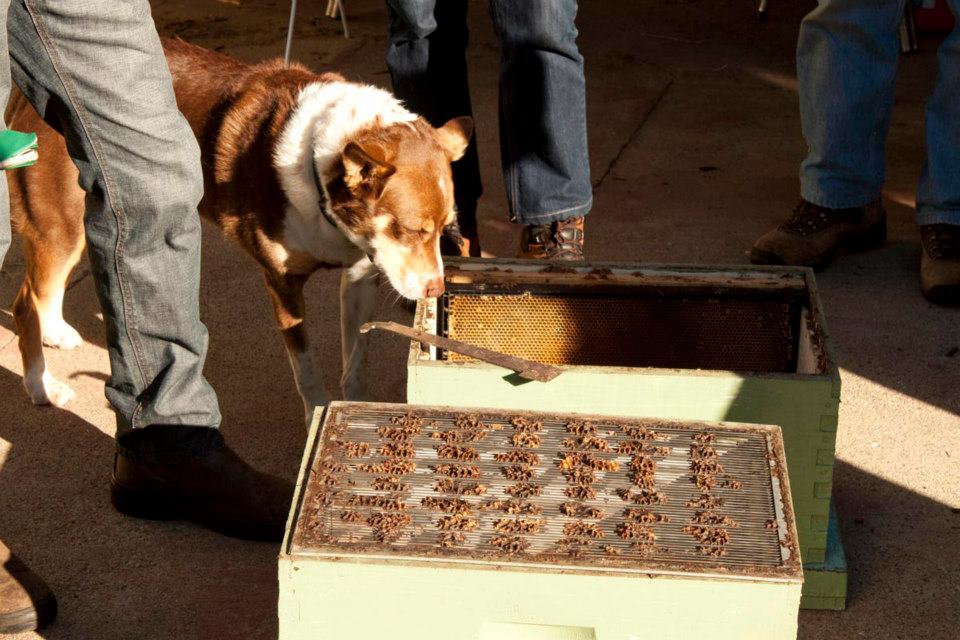
There were lots of us who wanted to talk about bees at the November Kitchen Gardeners’ Society meet.  And it is a fascinating subject.

Penny and Shane invited us all to their lovely, shiny new house where they have put in enormous amounts of work in establishing a garden before summer proper hits.  They have wonderful plans for bees and chooks and already have their fruit trees in.  It’s going to be a gorgeous, edible, shady and fragrant garden.

Rob, who first appeared at the August meet, and who is a man of many talents, offered to take us through setting up a bee hive in suburbia.  Which we did, but with many digressions and whimsical meanderings of conversation.

We were all so entranced that no-one remembered to take photographs.  Sorry about that.

However, here’s what you need to know:

  • Bee keeping starts off expensively – a hive, bees, bee suits, smoker and assorted paraphernalia will set you back in the order of $600, but this stuff lasts a long, long time and the benefits do outweigh the costs.
  • A jar of honey goes a long way to mollifying a sceptical neighbour.
  • The American hive tool is rubbish, make sure you get an Australian one.
  • You must harvest your honey (or, as Rob says: rob the hive) or the bees will seriously consider decamping and there’s not much you can do once they’ve gone.
  • Your veg patch will thank you, although the bees won’t make much different to your tomato pollination – this you can achieve by a vigorous watering or a gentle shake.
  • Suburban honey is really interesting as the bees range up to five kilometres and collect from whatever is flowering.
  • Conventional wisdom has it that paler bees are less aggressive than darker bees, but this is not necessarily the case.  Be careful around bees.

We”ll probably run another bee workshop next year.  December’s workshop will be on summerproofing your garden, and it’s at Dave and Joan’s place.  Watch your email for the address, and if you’re not on our mailing list, you’ll miss out!
Hot off the presses: TTG olive oil

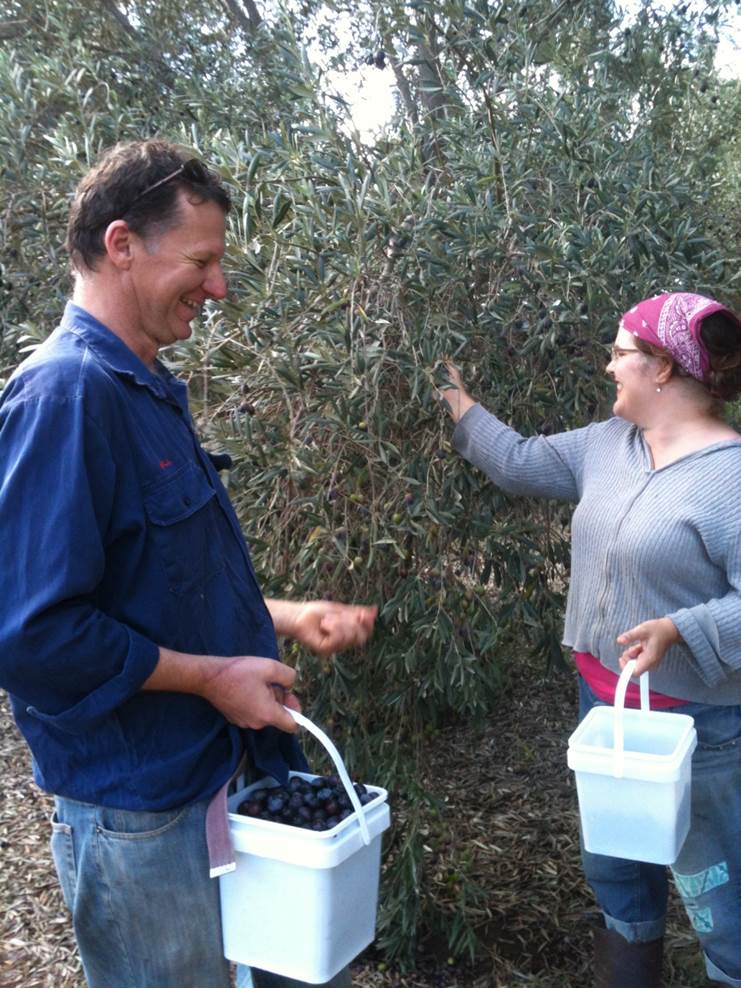
Recently, a small group of TTG members ventured forth to gather a very special type of seasonal produce: olives. Image

The sandy soils and Mediterranean climate of the Perth region create a perfect growing environment for these plants, and in the space of a few short hours the foraging party was able to accumulate quite an impressive haul: 140 kilos! Image

The next step was to deliver the bounty to Jumanga Olives in Carabooda for processing. It seems we were not the only ones who were keen on obtaining some fresh oil—there was quite a queue of olives! Image

We were asked to return for our oil 3 days later. Our pickings yielded 23 lovely litres of liquid gold which then needed to settle for a further 3-4 weeks.  Different varieties will each produce a unique blend, and it is suggested to include up to 30% green fruit in order to optimise flavour. Image

It is very satisfying that a few hours of easy work with friends can yield such productive results. There must be many more opportunities like this which are “ripe for the picking”, and if we can work together then we can also share the fruits of our labours.

Bees 101

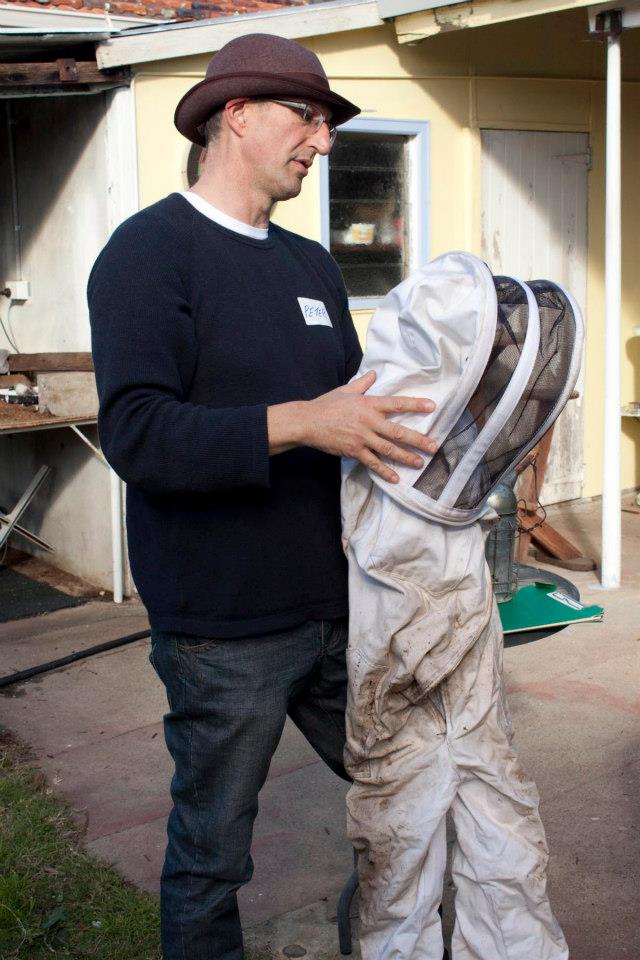
The latest meet of the Kitchen Gardener’s Society was all about keeping bees in the backyard. It was a lovely day, and more than one bee arrived to try to feed on the lovely cupcakes someone brought. For those that couldn’t make it, here’s a few tips I picked up from our bee keeper pro Peter Vedeniapine.

Why keep bees?

Honey of course! But they can also provide wax, pollen and more. Plus they’re vital for pollination. And it also looks rather satisfying.

What gear you need

  • a bee hive (8 or 10 frame, full or shallow depth, 2 boxes minimum). Peter’s advice was to buy a flatpack from Guilfoyle’s (contact below) and build it yourself ~$180. Apparently Bees prefer the wooden frames, plus avoids plastic! Wire queen excluder is better.
  • a smoker (can pick them up second-hand)
  • Protective suit
  • hive tool (for levering out frames and opening waxed up boxes) + brush (for brushing bees off frames, can use a dust pan brush)

Where to get bees and how to start a hive

There are two main ways to start a hive. Collect a swarm of wild bees or buy a queen. Collecting a ready-made swarm sounds good and it’s free, but you have to keep in mind, they could be more aggressive than bred bees. If you purchase a queen from Guilfoyle’s or a breeder, you’ll also need to buy some frames of honey and brood cells to get them on their way. Or if you’re lucky, you might have a friend who could give them too you.

Purchase and hire of bee equipment, along with some advice available from Guilfoyle’s in Midland.

Hive Location

When choosing a spot for your hive, make sure the flight path (opening) wont be in the way of garden access. Ideally face the entrance NE, so the sun wakes them up. It can help to have some protection on the West face to keep them cool in summer, but not essential, bees are pretty hardy.

Pete’s tip

  • Get good quality equipment
  • Calm bees mean a happy bee keeper!